Engineering Models
Use torque, drag, and critical RPM models as live reference signals
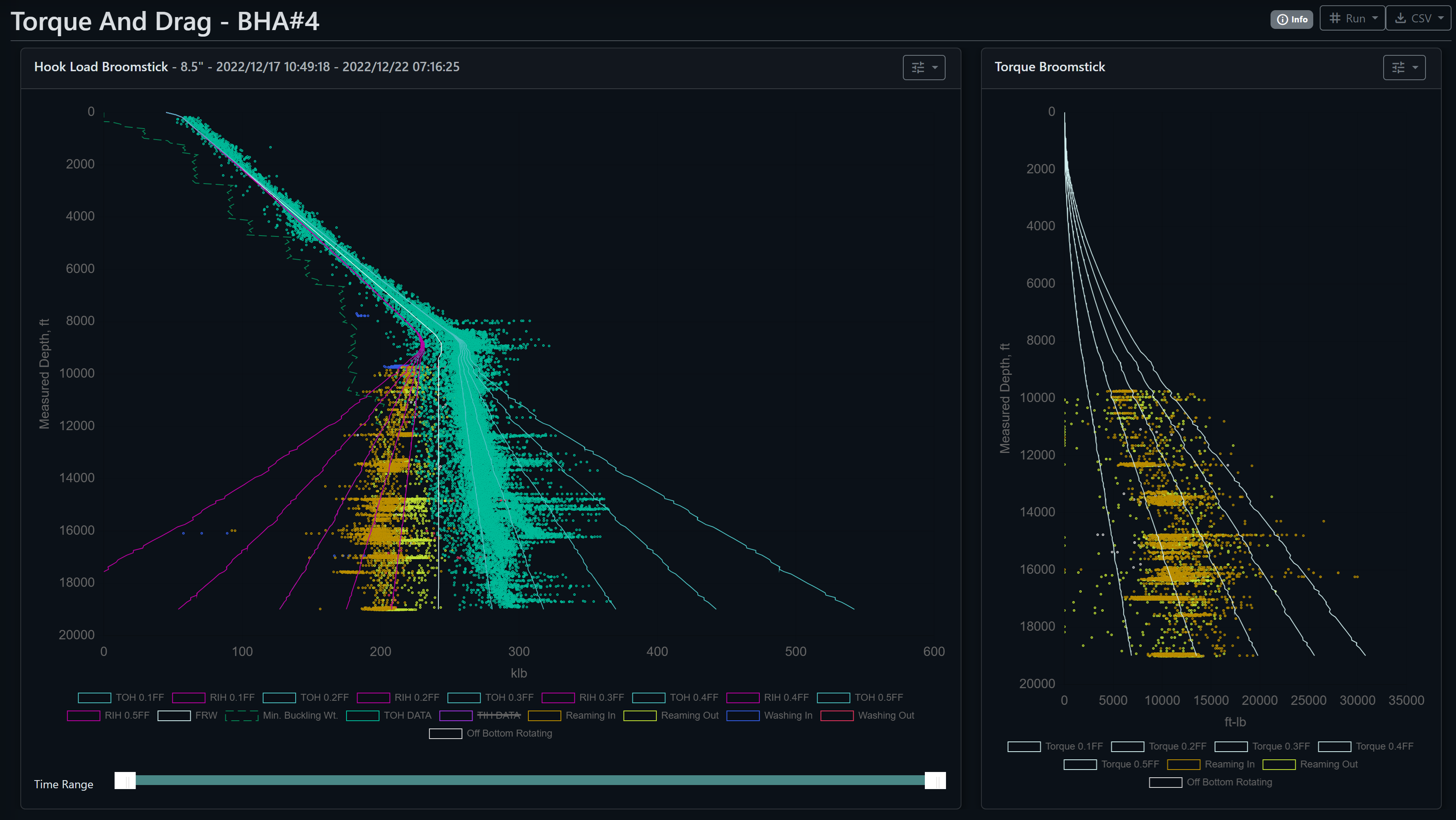
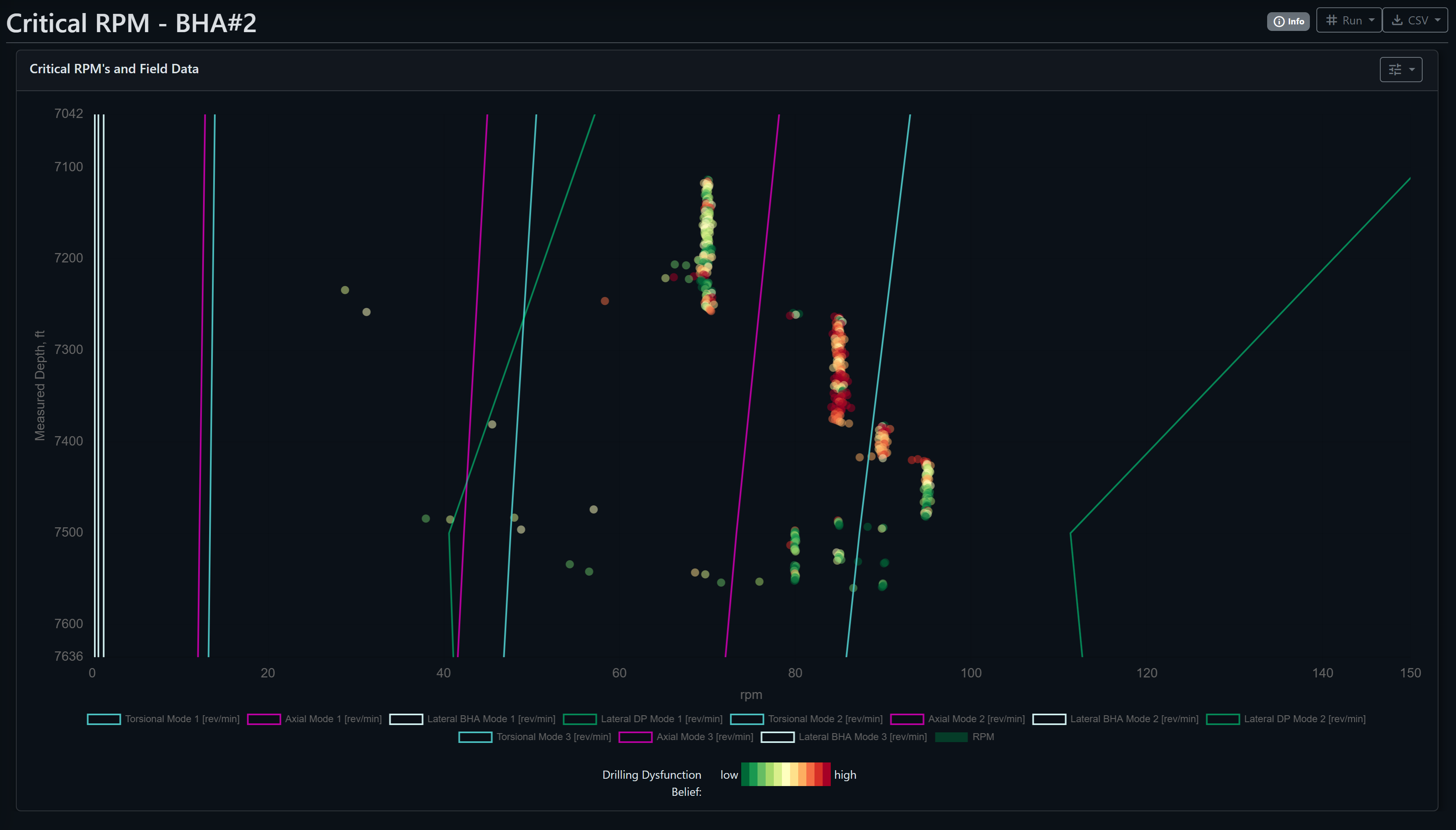
DrillingMetrics places actual pickup, slack-off, torque, and field RPM beside depth-aligned engineering models so changes in mechanical response can be reviewed as the well progresses.
- Pickup and slack-off response
- BHA critical speeds
- Depth-aligned field comparison
Calibrate the reference against field response
Pickup and slack-off weights identified from incoming data are displayed with the calculated response. A changing residual may reflect friction, hole condition, operating state, or an incorrect model input; it is evidence to investigate, not a diagnosis by itself.
- Generate torque-and-drag models for BHA and casing runs.
- Track pickup, slack-off, and torque response by depth.
- Review model deviation with the assumptions and operating state that produced it.
Treat critical speed as operating context
BHA harmonics modeling places field RPM beside modeled torsional, axial, and lateral critical speeds by measured depth. Proximity to a modeled mode can identify an operating range for review, but it does not establish that a dysfunction occurred or replace well-specific limits and field judgment.